MP takes Health Secretary to task over cuts to NHS funding in Cumbria
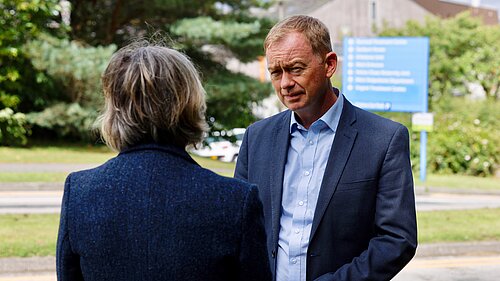
On the floor of the House of Commons last night, Cumbrian MP Tim Farron challenged the Secretary of State for Health and Social Care, Wes Streeting, over the state of local hospital services in Cumbria.
In late October, the Royal Lancaster Infirmary was once again placed under the highest NHS alert level due to increased pressures.
Operational Pressures Escalation Level (OPEL) 4 means a hospital is "unable to deliver comprehensive care" and patient safety may be compromised.
Last month, a 70-year-old man from Kendal was sent away from Lancaster’s accident and emergency department with a suspected broken leg.
And now it has emerged that University Hospital Morecambe Bay Trust is considering making cuts to acute bed numbers because of direct financial pressure being placed on them by the Government.
Speaking during an Urgent Question in Parliament, Tim said: “Across Cumbria and Morecambe Bay, the teams working in A&E, on hospital wards and in our ambulance crews are doing a stunning job dealing with the winter pressures in a community where, in my constituency, the average age is 10 years above the national average.
“Their jobs are made more difficult by the fact that 25% or more of the beds in our local hospitals are occupied by people who do not meet the criteria to reside. On top of that, the local trust in Morecambe Bay is planning to make bed cuts for financial reasons alone.
“We hear about additional investment in the NHS, but it does not feel like we are having that in Morecambe Bay and Cumbria. Will the Secretary of State personally investigate that, so that we are not cutting beds at a time when we need them more than ever?”
Responding, Health Secretary Wes Streeting said: ”We do flex beds depending on needs. For example, there were just over 101,000 beds open on average per day in the past week, which was up on the previous week and broadly the same as it was this time last year.
“We are investing in the NHS, and we have to ensure that people get the right care, in the right place at the right time. That means not just investing in secondary care; if anything, it means investing in the front and back doors of the hospital - primary care, community services and social care—to deal with the flow of patients through hospitals.
“I do not pretend that these are easy issues or that everything is going swimmingly in the NHS quite the opposite. I have seen conditions on our screens in the past week or two that I would not want to be treated in, someone I love to be treated in, or anyone to be treated in. It is a reflection of that fact that we inherited an NHS that was in enormous crisis. It will take time to recover. The key for me is achieving year-on-year improvements to get the NHS back on its feet and to ensure it is fit for the future.”